Mihaly Csikszentmihalyi
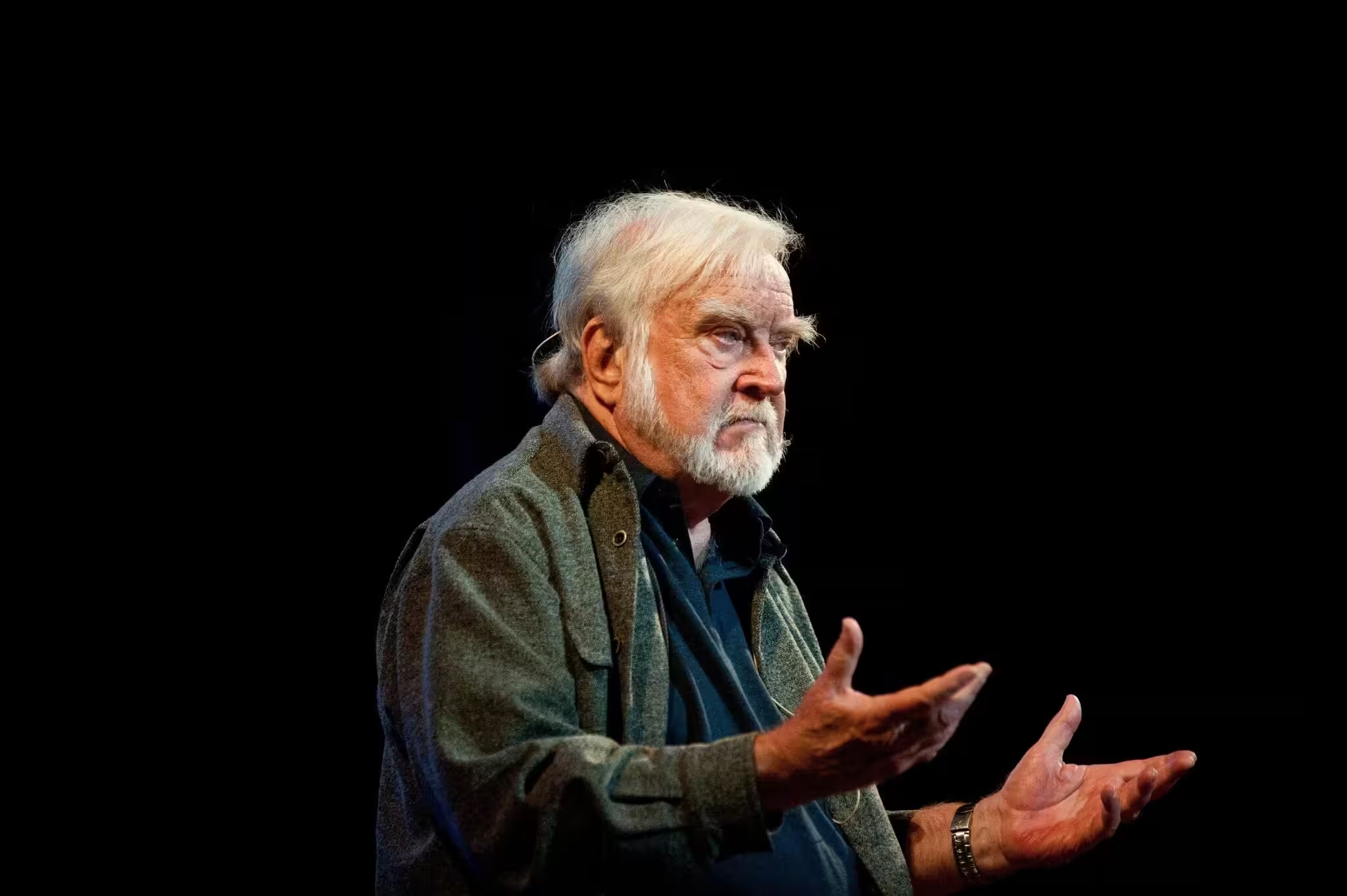
Csikszentmihalyi presenting a TEDx talk in 2011. His 2004 TED talk on flow has been viewed millions of times.
Introduction
Mihaly Csikszentmihalyi (29 September 1934 – 20 October 2021) gave psychology a single word for an experience everyone recognised and nobody had measured: flow. He defined it as the state in which a person is so absorbed in an activity that the activity becomes worth doing for its own sake — attention is fully invested, the sense of self recedes, time distorts, and the doing feels effortless even when it is hard. He then spent four decades showing that this state is not a rare gift of artists and athletes but something ordinary life either supplies or starves.
The question underneath all of it was one he settled on as a child in wartime Europe: what makes a life worth living? Noticing that money plainly does not settle the matter — surveys going back to 1956 have consistently found about a third of Americans calling themselves "very happy," a figure that has barely moved despite large rises in real income — he looked instead at people who find durable satisfaction in what they do, and tried to work out what they were getting that money does not buy. Richard Flaste of The New York Times described him, with affection, as "a man obsessed by happiness."
His second contribution is methodological and arguably more durable than the concept itself. To study experience as it is lived rather than as it is remembered, he and his collaborators gave people pagers and signalled them at random moments through the day, asking what they were doing and how it felt. The Experience Sampling Method that grew out of this work is now standard equipment across psychology, used far beyond the study of flow.
He spent most of his career at the University of Chicago before moving to Claremont Graduate University, where he founded the Quality of Life Research Center. With Martin Seligman he helped launch positive psychology, and he remained, to the end, its most reluctant celebrity — insistent that the field was not about feeling good but about building a life of engagement worth having lived.
On the name: the Hungarian surname is pronounced roughly mee-HAH-ee CHEEK-sent-mee-hah-yee (/ˈmiːhaɪ ˈtʃiːk-sɛnt-miˈhaɪ/). He was happy to make it easy for English speakers and suggested remembering it as "chick-sent-me-high." He went by Mike.
Early Life and Education
He was born in Fiume, Italy — today Rijeka, Croatia — on 29 September 1934, the son of Alfred Csikszentmihalyi (born Hausenblasz), a Hungarian career diplomat, and Edith Jankovich de Jeszenicze, who later worked for the United Nations. Two of his half-brothers died in the war, one during the siege of Budapest and one in a Soviet labour camp.
The war reached him early. In September 1944 he was in Budapest as Soviet forces closed on the city, and he later described leaving on the last train out, with the bridges over the Danube blown up just after it passed. He was interned with his family after the war. To get through it he played chess for hours — and noticed that while he was playing, the rest of the world fell away and time seemed to fly. It is the first recorded instance of the thing he would spend his career studying, observed in himself at ten years old.
What he took from those years was not a story of heroism but an observation. He watched adults who had been competent and content lose their bearings entirely once their jobs, homes and security were destroyed, and he wanted to know what it is that some people have and can draw on when the structure of a life collapses. He tried philosophy, art and religion as a teenager and found none of them sufficient.
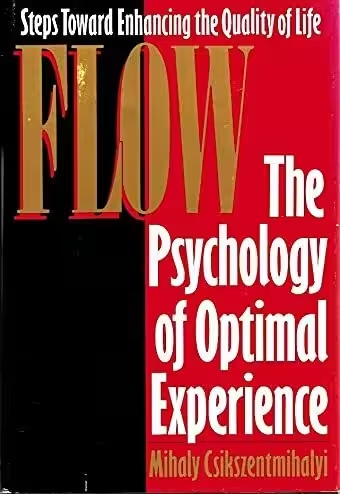
Flow: The Psychology of Optimal Experience (1990) made him a public figure.
The family settled in Rome after the war as refugees. His father, who refused to serve the new Communist government of Hungary, was stripped of his citizenship and opened a restaurant near the Trevi Fountain; Mihaly attended the Classical Gymnasium "Torquato Tasso" and dropped out for a time to help support the household.
The turn toward psychology came by accident. At seventeen, on a ski trip in Switzerland with no money to do anything else, he went to a free public lecture in Zurich advertised as being about flying saucers. The speaker ignored the saucers and talked instead about how a traumatised European psyche had projected them into the sky. The speaker was Carl Jung, whose name meant nothing to him at the time. He started reading Jung, and decided on psychology.
He arrived in Chicago in 1956 with almost nothing, worked nights as an accountant at a Loop hotel, and spent two years at the University of Illinois' Navy Pier campus before transferring to the University of Chicago. He took his bachelor's degree in 1960 and his doctorate in 1965, writing on artistic creativity under Jacob W. Getzels.
Academic and Professional Career
His dissertation was the origin of everything that followed. Studying painters, he noticed that when the work was going well they did not describe a goal — they described the process: the resistance of the canvas, the behaviour of the paint. They also described being unable to stop, and not wanting to, for reasons that had nothing to do with money or recognition. When the painting was finished, the absorption often vanished. That asymmetry — the reward sitting in the activity rather than in the outcome — was the puzzle he carried into the next forty years.
He then asked the same question of everyone else he could get to, and got the same answer back in the same words. "I was astonished to find that all those different people — rock climbers, basketball and hockey players, dancers, composers, chess masters — used very similar terms to describe their activities and the reasons they got so much out of them," he told the Chicago Tribune in 1986. He also noticed what the state required: one leading American composer of the 1970s described composing as an ecstatic experience so intense it felt almost as if he did not exist — and added that this apparently spontaneous process only happens to someone well trained, with at least ten years of technical knowledge in the field.
After six years teaching at Lake Forest College, he returned to the University of Chicago in 1971 and stayed for three decades, eventually chairing the department. It was there, in the 1970s, that he and his students built the Experience Sampling Method and ran the studies of artists, athletes, chess players, adolescents and workers that produced the flow model. He also conducted the longitudinal study of art students with Getzels, published as The Creative Vision (1976), which found that the quality of a problem a student chose mattered more for their later success than the virtuosity with which they solved it.
He moved to Claremont Graduate University in 1999 and founded the Quality of Life Research Center there in 2000. With Seligman he co-authored the 2000 American Psychologist paper that is usually taken as the founding statement of positive psychology. He was elected a Fellow of the American Academy of Arts and Sciences, received the Clifton Strengths Prize in 2009, awarded by the Gallup Organization at the Claremont positive psychology conference, and Hungary's Széchenyi Prize in 2011, and continued writing and teaching until his death from cardiac arrest at his home in Claremont on 20 October 2021, aged 87. He had married Isabella Selega, then a graduate student in Russian history, in 1961; their sons Mark and Christopher became academics at Berkeley and Cornell.
He wrote a long series of books after Flow, including one aimed at the business world, and while he never claimed to possess the secret of happiness he rarely declined an opportunity to offer advice about it. His own summary of the mechanism is worth quoting because it is not the upbeat version: "We can't afford to become trapped within ourselves, our jobs, and religions, and lose sight of the entire tapestry of life," he told Omni in 1995. "When the self loses itself in a transcendent purpose — whether to write great poetry, craft beautiful furniture, understand the motions of galaxies, or help children be happier — the self becomes largely invulnerable to the fears and setbacks of ordinary existence."
Major Contributions to Psychology
The Experience Sampling Method
The methodological idea is simple and its consequences were not. Retrospective questionnaires ask people to reconstruct an experience that ended hours or weeks ago, and memory reconstructs badly. Csikszentmihalyi instead equipped participants with pagers — later programmable watches and phones — that signalled them at random intervals, typically eight or more times a day, and asked them to record what they were doing, what they were thinking, and how they felt on scales of challenge, skill, mood and motivation.
Thousands of such reports, aggregated, produce a cross-section of a life as it is actually lived rather than a summary of it. That made it possible to ask questions that had been unanswerable: how much of an ordinary day is spent in genuine engagement, which activities produce it, and for whom. Martin Seligman put the achievement plainly: "It was an important move away from paper and pencil questionnaires and toward the real world."
The method has since been used to study adolescence, work, ageing, pain, psychosis and much else, and it is no longer especially associated with its originator — which is the usual fate of a method that works.
Flow
The word came from the interviews themselves. People kept reaching for the same metaphor: a current carrying them along. Csikszentmihalyi had first called the state "optimal experience," and the name he settled on in the early 1970s stuck because it was theirs, not his.
The core claim is that flow occurs when perceived challenges and perceived skills are both high and in balance, and that the quality of experience can be mapped on those two axes. High challenge against low skill produces anxiety; high skill against low challenge produces relaxation or boredom; low levels of both produce apathy, where the person withdraws attention altogether. Flow occupies the channel where demands stretch capacity without exceeding it.
Across more than 8,000 interviews with people around the world — Olympic athletes, leading writers, socially responsible chief executives, surgeons, farmers, assembly-line workers — his group found the same cluster of conditions recurring whenever someone reported flow. Different publications list six, seven, eight or nine of them; the canonical set is:
- Complete concentration on the task, with attention fully invested and nothing left over to monitor the self
- Clear goals and immediate feedback, so that a person always knows what to do next and how well it is going
- A merging of action and awareness, in which the usual split between doing and watching oneself do disappears
- Transformation of time, usually experienced as speeding up
- Loss of self-consciousness and, with it, of the fears and self-criticism that ordinary reflection brings
- A sense of control, in which failure is conceivable but not currently threatening
- Effortlessness, despite the difficulty of the activity — the paradox that made him doubt "leisure" as a category
- Autotelicity: the experience is rewarding in itself, and needs no external payoff
A late and important qualifier: the state is funnelled by attention, not by the activity. He found flow reported by assembly-line workers, surgeons, chess players and rock climbers, and he insisted that the same person could be bored by a symphony and absorbed by a spreadsheet. This is why the research turned toward the design of daily life rather than toward the ranking of activities.
Flow in Everyday Life
When the pager data are sorted by challenge and skill, the result is the finding that made the model actionable: people experience flow when both challenge and skill sit above their own average levels. Matching them at a low level produces apathy, not flow; the state requires the person to be stretched.
The full eight-channel version of the model maps the intermediate regions too — arousal where challenge runs ahead of skill and learning happens, control where skill comfortably exceeds challenge, relaxation where challenge drops away, worry where demands slightly exceed capacity — around the flow channel itself. Flow, on this account, is a narrow, shifting band, and the practical aim of the research programme was unapologetically prescriptive: to help people spend more of their ordinary day inside it. Csikszentmihalyi noted that some people manage this spontaneously, and that most do not.
That aim carries a puzzle he never fully resolved. Flow is intrinsically rewarding, and people say they want more of it — yet in the same time-budget data, people are several times more likely to watch television than to do something demanding. He understood this as a failure of attention management rather than of preference, but it remains the least flattering fact in his own dataset.
Autotelic Personality and the Creative Process
Some people report flow far more often than others, and Csikszentmihalyi called the trait that produces this the autotelic personality — from Greek auto (self) and telos (end or goal): a person whose activities are their own ends. Autotelic people are more curious, more persistent, less self-preoccupied, and better able to convert a dull situation into an engaging one by imposing goals and feedback on it.
Proneness to flow turns out to be partly heritable, with the rest shaped by environment and practice: a twin study by Mosing and colleagues (2012) found genetic influence on the disposition alongside substantial room for experience to enhance or curtail it. Positioned against the Big Five, the autotelic profile is positively associated with extraversion and conscientiousness and negatively with neuroticism and — surprisingly — with agreeableness (Ross & Keiser, 2014). The genuinely counter-intuitive result is that it shows no significant association with openness to experience, even though flow proneness is related to creativity. Ross and Keiser suggested openness is a more cognitive attribute while autotelic flow depends more on sensorimotor feedback; the alternative reading is that the two profiles are simply not the same thing, since the creative personality reliably pairs high openness with lower conscientiousness and lower agreeableness (Feist, 1998; Furnham & Bachtiar, 2008). Autotelic people share the extraversion but not the openness, and they carry the conscientiousness.
Whatever the mechanism, the outcomes are consistent. People with autotelic personalities report a greater capacity to meet challenges (Asakawa, 2004; 2010), to achieve goals (Ishimura & Kodama, 2009), to cope actively rather than avoidantly, and to be satisfied with their lives (Hirao & Kobayashi, 2013). Csikszentmihalyi and others noted that these are exactly the capacities a performing artist needs, given how inherently stressful artistic careers are (Marchant-Haycox & Wilson, 1992), and proposed that studying performers directly would be the natural next test of the profile.
His creativity research ran alongside this. From the longitudinal study of art students through Creativity (1996), he argued that creativity is not a property of individuals but of a system: a domain, a field of gatekeepers, and a person who produces something the field eventually accepts. The individual's contribution — curiosity, persistence, tolerance of ambiguity, the willingness to find rather than merely solve problems — is real, but it is not sufficient on its own.
The Social Side: Good Work and Good Business
In his final decades he extended the framework from individual experience to institutions, asking what makes work worth doing and how professions sustain standards under commercial pressure. With Howard Gardner and William Damon he developed the concept of "good work" as the intersection of excellence, engagement and ethical responsibility, and in Good Business (2003) applied flow theory to organisational life. This work is less well known than flow, and it is where his optimism is most visibly tempered: the same analysis that explains how flow makes work absorbing also explains how absorbing work can extract more than it gives.
Major Publications
- Beyond Boredom and Anxiety (1975) — the first systematic statement of the flow concept, based on studies of artists, athletes and chess players
- The Creative Vision: A Longitudinal Study of Problem Finding in Art (1976, with Jacob W. Getzels)
- Flow: The Psychology of Optimal Experience (1990) — the book that carried the idea to a general readership; issued in Britain by Rider in 2002 as Flow: The Psychology of Happiness
- The Evolving Self: A Psychology for the Third Millennium (1993)
- Creativity: Flow and the Psychology of Discovery and Invention (1996)
- Finding Flow: The Psychology of Engagement with Everyday Life (1997)
- Good Business: Leadership, Flow, and the Making of Meaning (2003)
- The Systems Model of Creativity (2014, collected papers)
Impact and Legacy
Flow is one of the very few psychological constructs to have entered ordinary language intact. Athletes and musicians used "in the zone" before Csikszentmihalyi and still do; what changed is that a state previously described only through metaphor acquired components, measures and a research literature. His 2004 TED talk made the idea ubiquitous, and it now underwrites a large applied industry in education, sport, product design and workplace management.
The Experience Sampling Method is his more quietly dominant legacy. Any researcher now studying daily experience, mood, or symptoms as they fluctuate in the real world is using an instrument built in his laboratory, often without knowing it. And along with Seligman, he shifted the discipline's centre of gravity: psychology had spent most of the twentieth century studying what goes wrong with people, and the argument that it should also study what makes a life worth living — as a research programme, not an inspirational slogan — is now unremarkable mainly because it succeeded.
The criticisms are substantial, and they are mostly about construct and measurement rather than about whether the experience is real.
Flow is hard to define, and different studies are not always measuring the same thing. Critics including Moneta (2012) have argued that the items in the original Flow Questionnaire capture several different constructs, and that elements treated as constituents of flow — the challenge–skill balance, the sense of control — are better understood as its antecedents and consequences. Reviews have repeatedly found inconsistent definitions and incompatible measures across the literature, which makes findings hard to synthesise.
The method has a built-in problem. Experience sampling interrupts the very state it is trying to capture: prompting someone to report on absorption pulls them out of it. Cowley and colleagues found that retrospective self-reports do not reliably track flow as it occurs. There is also a mismatch problem: in a study by Voelkl and Ellis, roughly half of all ESM reports caught people doing one thing and thinking about another, and what gets recorded is usually the activity, not the attention.
The theory's predictive power is weaker than its descriptive power. The challenge–skill model was revised in response to data — balanced low challenge and low skill turned out to produce apathy rather than flow, which is why the high–high requirement was added — but critics note it still cannot reliably say when flow will occur, and Keller and Landhäußer have argued that intensity is what the model fails to predict. Neuroscientific support is thin: Dietrich's transient hypofrontality hypothesis is one proposal among several, and flow has not produced a clear, replicated neural signature.
Flow is morally neutral, as Csikszentmihalyi himself said. Because the state is intrinsically rewarding it can be pursued compulsively, and the activities that produce it are not necessarily good — gambling, gaming and risky sport produce flow too. He wrote explicitly that flow is not "good" in an absolute sense and that any particular instance must be judged against wider social criteria.
The strongest recent critique is political rather than methodological. Braxton Soderman's Against Flow (2021) argues that flow's use in gamification and workplace design converts absorption into a resource to be extracted, blurring work and play so that play becomes unpaid labour — and that locating the problem in a person's attention quietly relieves institutions of any obligation to change the conditions of the work itself. Relatedly, some scholars have asked whether flow and the positive psychology built around it encode a Western, individualistic picture of the good life. Cross-cultural work generally finds flow-like states reported widely, but the activities that produce them and the value placed on individual absorption vary considerably.
Learn More
- Martin Seligman — his collaborator in founding positive psychology
- Carl Jung — whose lecture in Zurich turned an indifferent teenager toward psychology
- Howard Gardner — his partner in the study of good work
- Abraham Maslow — the humanistic tradition that flow research extended
- Flow — the concept itself, and how to recognise it in your own day
- Positive Psychology — the field he helped establish
- K Anders Ericsson — whose research on deliberate practice asked how expertise is actually built, a counterpart to flow’s account of optimal experience
- Reed Larson — who used experience sampling to chart how adolescents actually spend their time
- Kevin Rathunde — whose classroom and family studies ask what conditions make sustained interest possible
References
Csikszentmihalyi's principal works
- Csikszentmihalyi, M. (1975). Beyond Boredom and Anxiety. San Francisco, CA: Jossey-Bass.
- Csikszentmihalyi, M. (1990). Flow: The Psychology of Optimal Experience. New York: Harper & Row.
- Csikszentmihalyi, M. (1996). Creativity: Flow and the Psychology of Discovery. New York: HarperCollins.
- Csikszentmihalyi, M. (2004). "Flow, the secret to happiness" [video]. TED.
- Csikszentmihalyi, M., & Getzels, J. W. (1976). The Creative Vision: A Longitudinal Study of Problem Finding in Art. New York: Wiley.
- Nakamura, J., & Csikszentmihalyi, M. (2009). Flow theory and research. In C. R. Snyder & S. J. Lopez (Eds.), Handbook of Positive Psychology (pp. 195–206).
Selected research on flow and the autotelic personality
- Asakawa, K. (2004; 2010). Flow experience, culture, and well-being in Japan.
- Dietrich, A. (2003; 2004). Functional neuroanatomy of altered states of consciousness; the transient hypofrontality hypothesis. Consciousness and Cognition, 12(2), 231–256; 13(4), 746–761.
- Feist, G. J. (1998). A meta-analysis of personality in scientific and artistic creativity. Personality and Social Psychology Review, 2(4), 290–309.
- Furnham, A., & Bachtiar, W. (2008). Personality and intelligence as predictors of creativity. Personality and Individual Differences, 45(7), 613–617.
- Ishimura, I., & Kodama, M. (2009). Flow experiences and goal pursuit in Japanese college students. Japanese Journal of Educational Psychology, 57, 23–33.
- Koehn, S., Morris, T., & Watt, A. P. (2013). Flow state in self-paced and externally-paced performance contexts. Psychology of Sport & Exercise, 14(6), 787–795.
- Marchant-Haycox, S. E., & Wilson, G. D. (1992). Personality and stress in performing artists. Personality and Individual Differences, 13(10), 1061–1068.
- Mosing, M. A., et al. (2012). Practice and nature–nurture in expertise and flow.
- Ross, S. R., & Keiser, H. N. (2014). Autotelic personality through a five-factor lens. Personality and Individual Differences, 63, 109–114.
- Ullén, F., de Manzano, Ö., Almeida, R., Magnusson, P. K., Pedersen, N. L., Nakamura, J., & Madison, G. (2012). Proneness for psychological flow in everyday life. Personality and Individual Differences, 52(2), 167–172.
- Walker, C. J. (2010). Experiencing flow: Is doing it together better than doing it alone? The Journal of Positive Psychology, 5(1), 5–11.