Sigmund Freud
Introduction
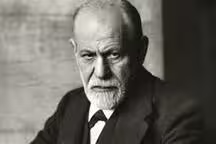
Sigmund Freud (born Sigismund Schlomo Freud; 6 May 1856 – 23 September 1939) was an Austrian neurologist and the founder of psychoanalysis — a clinical method for treating psychological distress through dialogue between patient and analyst, and a theory of mind built on the claim that much of mental life operates outside conscious awareness.
Freud's central wager was that symptoms are meaningful. Hysteria, phobias, obsessions, slips of the tongue and dreams were not, for him, noise or mere physiology; they were disguised expressions of unconscious conflict, usually rooted in childhood. That single idea — that there is a part of the mind we cannot introspect, and that it drives what we do — is now so embedded in ordinary language ("denial", "repression", "Freudian slip") that it is easy to forget how radical it was in 1900.
He is also one of the most contested figures in the history of science. Many of his specific claims have not survived empirical testing, and the psychoanalytic establishment he founded splintered repeatedly during his lifetime. What survives is both less and more than the theory he wrote: less, because few clinicians now accept psychosexual stages or the Oedipus complex as Freud framed them; more, because the assumptions he introduced — unconscious processing, internal conflict, defence against painful feeling, the formative weight of early experience — reshaped psychotherapy, psychiatry, literary criticism and popular culture well beyond anything his own clinical data could support.
Early Life and Education
Freud was born in Freiberg, Moravia (now Příbor, Czech Republic), the eldest of eight children in an Ashkenazi Jewish family. His father, Jacob Freud, was a wool merchant; his mother, Amalia Nathansohn, was Jacob's third wife and twenty years his junior. The family struggled financially and lived in rented rooms in a locksmith's house.
The family left Freiberg for Leipzig in 1859 and settled in Vienna in 1860 — the city where Freud would live and work for almost eighty years. He was a strong student, graduating from the Sperl Gymnasium with distinction in 1873 and reading well beyond the curriculum in several languages.
Freud entered the University of Vienna in 1873 intending to study law, then switched to medicine. His interests were unusually broad for a medical student: he attended Franz Brentano's philosophy lectures, studied physiology under Ernst Brücke, and worked in zoology under Carl Claus, including a research stint at the Trieste Zoological Station in 1876. He received his medical doctorate in 1881, having spent roughly nine years at the university — slower than usual, largely because his research appetites kept outrunning his degree requirements.
Academic and Professional Career
From the laboratory to the clinic
Freud began as a laboratory scientist. In Brücke's institute he worked on the neurophysiology of the medulla and did research on the sexual organs of eels and on the nervous systems of fish. He published on aphasia, coining the term "agnosia", and wrote papers on cerebral palsy that challenged the then-prevailing view that birth asphyxia was the cause.
Career economics pushed him out of the lab. In 1882 he entered the Vienna General Hospital to train in a paying speciality, working in Theodor Meynert's psychiatric clinic and in departments of dermatology and nervous diseases. In 1884–85 he published a series of papers on cocaine, including Über Coca, promoting it as a treatment for a range of conditions and as a local anaesthetic. The anaesthetic application was later taken up by Carl Koller; Freud's own enthusiasm for the drug as a cure-all was a mistake he came to regret.
Paris, hypnosis, and the turn to psychology
A travelling grant took Freud to Paris in 1885–86 to study under Jean-Martin Charcot at the Salpêtrière. Charcot was demonstrating that hysterical symptoms — paralyses, contractures, blindness without organic cause — could be induced and relieved under hypnosis. That observation was decisive: it showed that a mental process could produce, and remove, a physical symptom. Freud returned to Vienna committed to the problem of hysteria.
He opened a private practice in neurology in 1886 and married Martha Bernays, granddaughter of Hamburg's chief rabbi Isaac Bernays; they had six children. Through the late 1880s he worked with hypnosis and then abandoned it, finding that many patients could not be hypnotised deeply enough and that symptom relief rarely held. What replaced hypnosis was the method he called free association — the patient says whatever comes to mind, however trivial or embarrassing — and the analyst's attention to resistance, the points where the flow stops.
The founding years
Collaboration with the older physician Joseph Breuer, and Breuer's account of the case of Anna O., produced Studies on Hysteria (1895). During the late 1890s — a period documented in the letters to Wilhelm Fliess — Freud conducted a self-analysis, analysing his own dreams and childhood memories, and abandoned the "seduction theory" he had briefly held, which attributed hysteria to actual childhood sexual abuse. In its place he developed the theory of unconscious fantasy and infantile sexuality: the claim that the precipitating events are often imagined, and that the drives behind them are present in childhood itself.
The Interpretation of Dreams was published in November 1899, dated 1900 by the publisher, and remains his most influential book. Freud used the term "psychoanalysis" in print from 1896.
Institution and schism
Around 1902 Freud was granted a titular professorship at the University of Vienna and began inviting interested physicians to his apartment on Wednesday evenings; the "Wednesday Psychological Society" became the Vienna Psychoanalytic Society in 1908. In 1909 he travelled to the United States with Carl Jung and Sándor Ferenczi to lecture at Clark University — psychoanalysis's first public international recognition.
The movement's history is largely a history of defections. Alfred Adler broke away in 1911 to found individual psychology; Jung broke in 1913 after publishing Wandlungen und Symbole der Libido; Otto Rank split after The Trauma of Birth (1924). Freud's response was generally to treat departure as theoretical error rather than legitimate disagreement, and the pattern repeated for decades.
Illness, exile, and death
Freud was diagnosed with cancer of the jaw and palate in 1923, and underwent more than thirty operations over the following sixteen years. In 1933 his books were burned in Nazi Germany. After the 1938 annexation of Austria he left Vienna for London with his family, arriving in June 1938. He died there on 23 September 1939, his physician Max Schur administering a lethal dose of morphine at his request.
Archival work published since 2025 has revised the standard account of that emigration. Freud was allowed to ship the entire contents of Berggasse 19 — including his collection of antiquities — to London, which made his departure look orderly and privileged. Documents acquired by the Sigmund Freud Museum in Vienna from the estate of the Nazi-appointed "provisional administrator" of the International Psychoanalytical Publishing House, owned by Freud and Anna Freud, show that the regime stripped him of almost all his financial assets through the publishing house while his son Martin, its managing director, was put under intense pressure to settle. The same research overturns the long-repeated claim that Freud abandoned his four sisters in Vienna: family correspondence now held in the Library of Congress documents repeated, ultimately unsuccessful attempts to get them out. Rosa Graf, Maria Freud, Pauline Winternitz and Adolfine Freud were deported in 1942; Adolfine died at Theresienstadt, the other three were murdered at Treblinka. The findings formed the museum's exhibition Documents of Injustice. The Case of Freud, which opened in October 2025 and runs to November 2026.
Major Contributions to Psychology
The unconscious
Freud's most durable claim is that conscious awareness is a small, edited fraction of mental life. Thoughts, memories and wishes that are unacceptable to the person are pushed out of awareness by repression, but continue to exert pressure, returning in disguised form as symptoms, dreams, slips and free-associative material. Therapy, on this model, is the work of making the disguised material available to consciousness.
The structural model: id, ego, and superego
In The Ego and the Id (1923) Freud set out a three-part model of personality. The id is the inherited, entirely unconscious reservoir of drives, operating on the pleasure principle. The ego is the largely conscious executive that negotiates between drive, reality, and morality. The superego is the internalised voice of parental and social demand — conscience, and the source of guilt. Personality, on this account, is a continuous negotiation among three claimants, and psychopathology is the rigid or costly compromise reached when the negotiation fails. See Id, Ego and Superego.
Psychosexual development
Freud proposed that personality is shaped by the course of sexual development through five stages — oral, anal, phallic, latency and genital — each centred on a bodily source of gratification. Difficulty or overindulgence at a stage was said to produce a characteristic adult "character type"; unresolved conflict in the phallic stage produced the Oedipus complex and, in his account of female development, the Electra complex. This is the part of Freud's theory that has aged worst: the stages are not supported by longitudinal evidence, and the account of female development was rejected early and forcefully by Karen Horney and other analysts.
Defence mechanisms
Freud, and later Anna Freud, described the repertoire of techniques the ego uses to reduce the anxiety generated by unacceptable impulses: repression, denial, displacement, projection, reaction formation, regression, rationalisation, sublimation. Unlike the psychosexual stages, the concept of defence has travelled well — it is one of the few Freudian constructs with real empirical standing, and it anticipates later work on motivated reasoning and emotion regulation.
Dream theory
In The Interpretation of Dreams Freud argued that dreams are disguised fulfilments of repressed wishes. The manifest content — what the dreamer remembers — is produced from latent dream-thoughts by "dream-work": condensation, displacement, and secondary revision. The manifest/latent distinction is still used, but the specific claim that every dream is a wish-fulfilment, and Freud's reliance on symbolism, have not been supported. Modern sleep research attributes dreaming primarily to neurobiological processes during REM sleep.
Life and death instincts
In Beyond the Pleasure Principle (1920) Freud argued that the pleasure principle could not explain everything — notably the repetition of traumatic dreams and the compulsion to repeat painful experience. He posited a conflict between life instincts (Eros, including sexuality and self-preservation) and a death instinct (Thanatos), expressed outwardly as aggression and inwardly as self-destruction. The death instinct was rejected by most of his followers even at the time.
Technique
Freud's clinical method — free association, attention to resistance, analysis of transference (the patient's displacement of feelings about significant figures onto the analyst), and interpretation — is arguably his practical legacy, separable from his theories. Psychodynamic therapy as practised today retains the technique while dropping much of the metapsychology.
Major Publications
- Studies on Hysteria (1895, with Joseph Breuer) — case histories, the "talking cure", and the origins of the cathartic method
- The Interpretation of Dreams (1899, dated 1900) — the dream-work, the model of the mind, and Freud's self-analysis
- The Psychopathology of Everyday Life (1901) — slips of the tongue, forgetting, and bungled actions as expressions of unconscious intention
- Three Essays on the Theory of Sexuality (1905) — infantile sexuality and the psychosexual stages
- Jokes and Their Relation to the Unconscious (1905) — wit as a socially permitted outlet for repressed material
- Totem and Taboo (1913) — Freud's conjectural account of the origins of religion and morality
- On Narcissism: An Introduction (1914) — introduces narcissism as a developmental stage and a clinical category
- Introductory Lectures on Psychoanalysis (1916–17) — his most systematic presentation, given at the University of Vienna
- Beyond the Pleasure Principle (1920) — repetition compulsion and the death instinct
- Group Psychology and the Analysis of the Ego (1921) — identification, leadership, and collective behaviour
- The Ego and the Id (1923) — the structural model of personality
- The Future of an Illusion (1927) — religion as illusion and wish-fulfilment
- Civilization and Its Discontents (1930) — the conflict between instinctual life and the demands of civilisation
- An Outline of Psychoanalysis (1940, posthumous) — his last, unfinished summary of the theory
Impact and Legacy
Freud's influence on intellectual history is difficult to overstate and difficult to evaluate, because it is so rarely the influence he intended. Psychoanalysis shaped psychotherapy for most of the twentieth century and generated direct descendants — Jung's analytical psychology, Adler's individual psychology, Melanie Klein's object relations theory, Anna Freud's child analysis, Jacques Lacan's return to Freud — most of them founded by people who rejected his central doctrines. Outside clinical work, psychoanalytic ideas reorganised literary criticism, anthropology, film theory and art; the vocabulary of everyday psychological talk — repression, projection, denial, ambivalence, defence — is largely his.
The scientific critique is equally substantial. Karl Popper used Freud (with Marx and Adler) as his stock example of a theory that could accommodate any observation and therefore forbade none, and so failed the test of falsifiability. Adolf Grünbaum argued that the clinical evidence Freud cited was contaminated by suggestion, since the analyst both produces and interprets the patient's material. Controlled trials generally find that psychodynamic therapy works, but attribute the effect to common factors — the therapeutic relationship, expectation, structured attention — rather than to the specific mechanisms Freud described. Feminist critics, Horney foremost among them, argued that his account of female development was not observation but prejudice.
The texts themselves have also been re-edited. Mark Solms published the 24-volume Revised Standard Edition of the Complete Psychological Works of Sigmund Freud in 2024, after roughly thirty years of work, replacing James Strachey's translation. The revision restores material Strachey omitted, adds previously untranslated letters, lectures, essays and case studies — some of which qualify the received view of Freud's positions on women and homosexuality — and re-translates technical terms to undo what critics have long called Strachey's "false scientizing" of the German. Solms set out his rationale in an interview in Psychodynamic Psychiatry (2025, vol. 53, no. 1). Whether the revision changes the verdict on Freud's theory is contested; what it has already changed is which texts that verdict has to be reached against.
On one specific question the evidence has moved in Freud's favour: whether the therapy he devised works. A pre-registered umbrella review in World Psychiatry (Heim, Leichsenring, Abbass and colleagues, 2025) applied updated criteria for empirically supported treatments to recent meta-analyses of randomised trials and concluded that psychodynamic therapy merits a strong recommendation in depressive, anxiety, personality and somatic symptom disorders — high-quality evidence in depressive and somatic symptom disorders, moderate-quality in the others — that it performs comparably to other active treatments, and that it is cost-effective with identifiable mechanisms of change. A separate 2025 meta-analysis of the experiential dynamic therapies, the affect-focused branch of the psychodynamic family, pooled 57 randomised trials (n = 4,330) and found large effects against inactive controls (Hedges' g = −0.96 at post-treatment, −1.11 at follow-up) but only a small, non-significant advantage over active treatments at post-treatment (g = −0.17) that became significant at follow-up (g = −0.40). Both reviews are careful about their own limits: heterogeneity exceeded I² = 75% in the second, lower-quality and non-Western trials reported larger effects against inactive controls, and the authors of both are themselves leading figures in psychodynamic outcome research. What they establish is that psychodynamic therapy produces change; they do not establish that it produces change for the reasons Freud gave.
The defensible middle position, and the one most historians now hold, is that Freud asked the right questions with inadequate instruments. He had no way to test claims about unconscious conflict, and the evidence he had — a small, unrepresentative clinical sample, filtered through his own interpretive authority — could not support the architecture he built on it. But the questions were real, and the field he opened is still being worked.
Associated Figures
- Joseph Breuer — early collaborator; the case of Anna O. and the cathartic method
- Carl Jung — his designated heir, who broke with him in 1913 over the nature of the unconscious and founded analytical psychology
- Alfred Adler — early follower who broke away in 1911, emphasising social interest and the inferiority complex
- Anna Freud — his daughter; systematised defence mechanisms and founded child psychoanalysis
- Melanie Klein — extended psychoanalysis to young children through play technique; founder of object relations theory
- Ernest Jones — his biographer and the chief organiser of psychoanalysis in the English-speaking world
- Karen Horney — among the first major dissenters from Freud's theory of female psychology
- Jacques Lacan — later reinterpreter who returned to the linguistic and structural dimensions of Freud's texts
Learn More
- What is Psychoanalysis?
- Id, Ego and Superego
- The Oedipus Complex
- Psychodynamic Therapy
- History of Psychology
- Ernst Jentsch — whose 1906 essay on the uncanny Freud took up, reinterpreted and made famous
- All Psychologists A–Z
- Heinz Kohut — who broke with Freud over narcissism and built self psychology on the outcomes
References
- Freud, S. (1900). Die Traumdeutung. Franz Deuticke.
- Freud, S. (1923). Das Ich und das Es. Internationaler Psychoanalytischer Verlag.