John B. Watson
Introduction
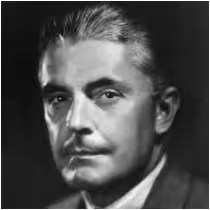
John Broadus Watson (9 January 1878 – 25 September 1958) founded behaviourism, and did more than anyone to make American psychology an experimental, objective discipline rather than a branch of philosophy — then left academia at forty-two and spent the second half of his working life applying its principles to selling coffee.
His 1913 paper "Psychology as the Behaviorist Views It" opened with a sentence that still defines the ambition: psychology is "a purely objective experimental branch of natural science," whose "theoretical goal is the prediction and control of behavior." Introspection was to be discarded, consciousness was not a proper object of study, and there was no dividing line between human and animal behaviour worth maintaining. Within a decade this had carried the field.
He is now mainly remembered for one experiment, and the memory is largely deserved. In 1920 he and Rosalie Rayner conditioned a fear of a white rat into an infant, demonstrated that the fear generalised to other furry objects, and — the part that cannot be defended — never removed it. Modern reanalysis has also made the experiment's scientific status considerably shakier than its textbook version, which is a separate problem from the ethical one.
Early Life and Education
Watson was born near Greenville, South Carolina, into a poor family. His father, Pickens Butler Watson, was a difficult and violent small farmer who abandoned the household in 1891, when Watson was thirteen. His mother, Emma, was a devout Southern Baptist who raised him under strict religious rules; the result was a lifelong hostility to religion.
He was a poor and troublesome student. Ridiculed by classmates for being from the backcountry, he did badly in school and was twice arrested — once for fighting with a Black classmate, once for firing a gun inside town limits.
At sixteen he asked to see the president of Furman University directly and talked his way in. He began in theology to satisfy his mother and abandoned it quickly, taking a master's degree in 1900 — the university's first — at twenty-one.
He then spent a year as principal of a one-room school, and wrote to William Rainey Harper, the president of the University of Chicago, asking to be admitted free. Harper admitted him. Watson began in philosophy under John Dewey, found that he could not follow Dewey's teaching, and moved to psychology, taking James Rowland Angell as his adviser along with the physiologist Henry Donaldson. He worked his way through as a janitor, a laboratory assistant looking after rats, and a waiter.
He completed his doctorate in 1903 with a dissertation on the relation between brain myelination and learning ability in the white rat, showing that the degree of myelination was largely unrelated to how well the animals learned — a negative result that mattered, because it separated learning from a maturational account. He is said to have been the youngest person to receive a doctorate from Chicago.
Academic and Professional Career
Watson joined Johns Hopkins in 1908. When the department chairman resigned, Watson succeeded him and took over the editorship of Psychological Review. He co-founded the Journal of Animal Behavior with Robert Yerkes and spent summers in the Dry Tortugas studying the instinctive behaviour of terns — work from which his later rejection of instinct partly derived.
The 1913 manifesto made his reputation, and in 1915 he was elected president of the American Psychological Association at thirty-seven. During the First World War he worked on military applications, and from 1918 turned to the study of human infants, among the earliest attempts to use babies as experimental subjects.
That work ended his academic career. Watson began an affair with his research assistant Rosalie Rayner, then a graduate student. His wife Mary — whose brother was Harold Ickes, later Secretary of the Interior — obtained his love letters to Rayner, and the divorce proceedings of 1920 put excerpts of them in the Baltimore papers. The university asked for his resignation in October 1920; he married Rayner that December and never held another full-time academic post.
He moved to New York and joined the advertising agency J. Walter Thompson in 1921, becoming a vice-president by 1924. He continued to teach and write popularly — at the New School for Social Research and Cooper Union through the 1920s, in Harper's, the Nation, and elsewhere — and the lectures became Behaviorism (1924). He left JWT for the William Esty Agency in 1935, the year Rosalie died of pneumonia, and retired in 1945 to a farm in Connecticut.
In 1957 the APA awarded him its Gold Medal. He did not attend. He died in September 1958, and shortly before his death burned his extensive collection of letters and personal papers, leaving historians almost nothing to reconstruct the origins of behaviourism from its author's side.
Major Contributions to Psychology
The behaviourist manifesto
The 1913 paper argued that psychology had been paralysed by its method. Introspection produced data whose reliability could not be checked, consciousness was not observable by anyone other than the person having it, and a science built on such data could not progress. Replace both with the observation of behaviour — stimulus and response — and psychology becomes a natural science with a practical aim: given a stimulus, predict the response; given a response, identify the stimulus.
He was explicit that the goal was prediction and control, not merely description. That framing is what made behaviourism attractive to a country interested in applied psychology, and it is also what generated most of the criticism that followed.
Against instinct
Watson moved through three positions and ended by denying that instincts exist in the sense psychologists then used. Newborns have a small set of unlearned responses — breathing, heartbeat, sneezing, and a few emotional reactions — but the elaborate behaviour catalogued as instinctual, he argued, is learned. Having removed inherited behavioural structure, he was left with the conclusion that behaviour is shaped by environment.
The conditioning of emotion
The Little Albert study, with Rosalie Rayner, was the demonstration. An infant who had shown no fear of a white rat was exposed to it repeatedly together with a loud noise, and came to fear the rat — and then, by generalisation, a rabbit, a fur coat, and cotton wool. The claim was that phobias are learned rather than expressions of unconscious conflict, and that complex emotions are built by conditioning out of three unlearned ones: fear, rage, and love.
It remains the most reproduced and most criticised experiment in the history of psychology.
Language and thought
Watson treated language as a manipulative habit acquired by imitation, with words functioning as substitutes for objects and situations, and thought as subvocal speech — implicit behaviour of the same kind as overt speech, differing only in that the movements are too small to observe. This is a poor account of thought, and it was the aspect of his position that the cognitive revolution most directly overturned.
Psychology applied to advertising
His second career was not a departure from his first. At JWT he applied conditioning and demographic analysis to selling — most durably by popularising the coffee break, invented as a device for Maxwell House. He is one of the first psychologists to work in advertising at that level, and the techniques he introduced are the reason applied psychology is now the field's largest employer.
Major Publications
- "Psychology as the Behaviorist Views It" (1913, Psychological Review, 20, 158–177)
- Behavior: An Introduction to Comparative Psychology (1914)
- "The Place of the Conditioned Reflex in Psychology" (1916, Psychological Review, 23, 89–117)
- Psychology from the Standpoint of a Behaviorist (1919)
- "Conditioned Emotional Reactions" (1920, with Rosalie Rayner, Journal of Experimental Psychology, 3, 1–14) — the Little Albert paper
- Behaviorism (1924; revised 1930)
- Psychological Care of Infant and Child (1928, with Rosalie Rayner Watson)
- The Battle of Behaviorism (1928, with William McDougall)
Impact and Legacy
Watson redirected psychology toward method. The insistence that claims be testable against observable evidence, that constructs be defined operationally, and that the field's object be behaviour rather than introspective report, is now so thoroughly embedded that it reads as unremarkable. Skinner's radical behaviourism, the learning theories of Hull and Tolman, the cognitive revolution's retention of experimental method while rejecting the ban on mental states — all descend from the position he staked out in 1913.
Criticism — and it comes in several kinds.
The experiment is the central problem. Little Albert was an infant, there was no consent, there was no follow-up, and the induced fear was never removed: Watson and Rayner left the study with the child still conditioned. That alone would disqualify the study under any contemporary standard, and no modern ethics committee would permit it.
What has emerged more recently is worse for the study's scientific standing. The child's identity is disputed between two candidates — Douglas Merritte, who died at six of hydrocephalus, and William Barger — and one analysis of Watson's film and notes (Fridlund and colleagues, 2012) argues the infant shown displays neurological abnormalities. A reanalysis by Powell and Schmaltz (2021) concluded that the conditioning was "largely ineffective": Albert's fear responses were inconsistent, weak, and sometimes absent. If that is right, generations of textbooks have been describing an experiment that did not demonstrate what it is cited for.
The identification dispute has also produced two pieces of evidence that are closer to decisive than the circumstances suggested either candidate would allow. Watson and Rayner recorded that Little Albert was twelve months and twenty-one days old on the last day of the experiment, when he was taken from the hospital; that is Barger's age at discharge almost exactly. And when Powell and colleagues were permitted to examine Douglas Merritte's clinical file directly, it recorded that Merritte was completely blind — which is difficult to reconcile with film of Little Albert tracking objects and engaging in social referencing. The balance of the specific evidence now favours Barger, though the question is not formally closed. If it is Barger, then the most-quoted ethical condemnation in the history of psychology rests on a child who was not neurologically impaired and who lived to eighty-seven; the ethical objection does not depend on that and survives either way, but the scientific objection changes shape considerably.
The one thing that came out of it cleanly was done by somebody else. Mary Cover Jones, who heard Watson lecture on Albert, took the question "can a fear be removed as well as installed" and answered it in 1924 by eliminating a three-year-old's fear of rabbits — the origin of behaviour therapy. Watson installed a fear and walked away; the useful procedure came from the person who reversed his question.
The theory overreached. Watson's environmentalism was extreme enough that he denied inherited behavioural structure almost entirely. This was always stronger than his evidence, and it has not survived: heritable influences on behaviour are now among the best-established findings in psychology. He also rejected Thorndike's law of effect for introducing subjective elements, which left him unable to explain how consequences shape behaviour — a gap his successors had to fill.
The child-rearing advice was harmful. Psychological Care of Infant and Child (1928) urged parents toward emotional detachment, warning against too much affection and describing an ideal child who entertains himself, cries only from physical pain, and does not ask questions. It was widely read and widely followed. His own sons by Rosalie had severe difficulties, and one died by suicide; the causal inference from method to outcome is not safe to draw, but the advice itself is indefensible on the evidence now available, since attachment research points the opposite way.
There is a pattern in the biography. He was forced out of Johns Hopkins for an affair with a student. Two decades later, by the New School's own account, he stopped teaching there because of a charge of sexual misconduct. And he destroyed his papers, depriving the field's historians of the record. These are not arguments against behaviourism, and they are not usually what the textbooks mention. They are part of what the man was.
On his most famous sentence, he deserves better than he gets. The "dozen healthy infants" passage is almost always quoted without its final clause: "I am going beyond my facts and I admit it, but so have the advocates of the contrary and they have been doing it for many thousands of years." It is also almost always quoted without its context, which is an extended argument against eugenics. He was an extreme environmentalist, but he was an environmentalist at a moment when the mainstream of his discipline was hereditarian, and the sentence that made him notorious was written to oppose it.
Learn More
- B.F. Skinner — who built radical behaviourism on the foundation Watson laid
- Ivan Pavlov — whose conditioning Watson imported into American psychology
- Mary Cover Jones — who took Watson's question and answered it in the opposite direction
- Edward Thorndike — whose law of effect Watson rejected, and which behaviourism later needed
- Behaviourism — the school he founded
- History of Psychology — the period he redirected
References
- Watson, J. B. (1913). Psychology as the behaviorist views it. Psychological Review, 20(2), 158-177.