B.F. Skinner
Introduction
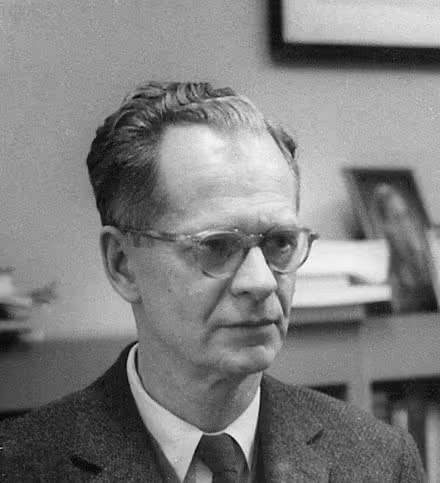
Burrhus Frederic Skinner (20 March 1904 – 18 August 1990) was an American psychologist who made the consequences of behaviour, rather than its antecedents or its inner causes, the central object of psychological science. Working almost entirely with rats and pigeons, he established that the rate at which an animal performs an action is a lawful function of what has followed that action in the past — a finding that produced the most extensively replicated body of data in the history of learning research.
Skinner is the most consequential behaviourist and one of the three figures, with John B. Watson and Ivan Pavlov, on whom the school rests. But he was not simply a successor. Watson and Pavlov were interested in behaviour that is elicited by a stimulus; Skinner's subject was behaviour that is emitted — that the organism produces on its own, and whose frequency is then shaped by what happens next. He called this operant conditioning, and he argued that most of what humans do, including most of what they say, falls under it.
In a June 2002 survey published in the Review of General Psychology, Skinner was ranked the most cited psychologist of the twentieth century. He was also, in the last two decades of his life, the most publicly reviled — the author of Beyond Freedom and Dignity, a book arguing that the concept of autonomous human agency is scientifically obsolete and socially dangerous, which put him on the cover of Time and made him a convenient villain for nearly everyone.
Early Life and Education
Skinner was born in Susquehanna, Pennsylvania, a small railroad town, to Grace and William Skinner; his father was a lawyer. He described his childhood as warm and orderly, with an unusual amount of unsupervised time and an early appetite for building things — kites, model aeroplanes, a device for sorting berries, an elaborate contraption that fed him breakfast in bed. That mechanical inventiveness turned out to be the more important inheritance: Skinner's contribution to psychology is inseparable from the apparatus he designed.
His younger brother Edward died of a brain haemorrhage at sixteen. Skinner wrote about it briefly and flatly in his autobiography, and biographers have reasonably read his later insistence that behaviour is fully caused by environment as connected to a life containing an event that had no explanation anyone could accept.
He went to Hamilton College in Clinton, New York, and took a BA in English literature in 1926, intending to become a writer. It went badly. He spent roughly a year in Greenwich Village, wrote constantly, published almost nothing, and later called the period his "dark year". What pulled him out was reading: Bertrand Russell's favourable discussion of Watson's behaviourism, and Pavlov's Conditioned Reflexes — which he read not as a psychologist but as someone looking for a science that could say something definite about what people do.
He entered Harvard in 1928 and took his PhD in 1931.
Academic and Professional Career
Harvard and the invention of the operant chamber
As a graduate student Skinner built the equipment that made his career. He was unsatisfied with the standard maze experiments, which produce one data point per trial and force the experimenter to average across trials and across animals. What he wanted was a continuous record of a single organism's behaviour over time, so that the shape of the behaviour itself could be studied.
The result was the operant conditioning chamber — universally, and to his irritation, called the Skinner box — and, paired with it, the cumulative recorder, a drum-and-pen device that drew responses as a rising line whose slope was the response rate. Together they let one animal generate tens of thousands of data points in a session, and they let Skinner study behaviour as a continuous stream rather than a series of trials.
Out of this came The Behavior of Organisms (1938), a systematic experimental analysis of how environmental variables control behaviour, and the distinction that organises everything else he did.
Minnesota, Indiana, and Harvard again
Skinner stayed at Harvard as a researcher until 1936, when he moved to the University of Minnesota, where he married Yvonne Blue; they had two daughters, Julie and Deborah. In 1945 he went to Indiana University as chair of the psychology department, and in 1948 returned to Harvard, where he stayed. He was named Edgar Pierce Professor of Psychology in 1958 and held the chair until his retirement in 1974.
During the war he worked on Project Pigeon (later ORCON), a genuinely funded attempt to build a guided missile steered by pigeons pecking at a screen image of the target. The pigeons worked. The programme was cancelled, twice, partly because the military could not take the premise seriously and partly because radar guidance arrived.
The public intellectual
After Walden Two (1948) — a novel about a small community engineered along behaviourist lines — Skinner became a figure well outside the discipline. Science and Human Behavior (1953) set out the implications for education, law, religion and government. Verbal Behavior (1957) extended the analysis to language. Beyond Freedom and Dignity (1971) argued that the traditional concept of the autonomous individual was a survival of prescientific thinking and that a culture designed on behavioural principles would be both more humane and more effective. About Behaviorism (1974) was his attempt to correct the misreadings.
He was diagnosed with leukaemia in 1989. He gave his last public address, arguing that cognitive psychology had not delivered on its promises, ten days before he died on 18 August 1990.
Major Contributions to Psychology
Operant and respondent behaviour
Skinner's organising distinction is between two kinds of behaviour controlled in two different ways.
Respondent behaviour is elicited by a stimulus — salivation at the sight of food, the eye blink at a puff of air. It is modified by classical (Pavlovian) conditioning, in which a neutral stimulus is paired with an eliciting one, and it is measured by latency or intensity.
Operant behaviour is emitted rather than elicited: nothing in the environment triggers it, it simply occurs, and its future rate depends on its consequences. A rat presses a lever; food follows; the rate of pressing rises. This is operant, or instrumental, conditioning, and it is measured by rate of occurrence. Edward Thorndike had studied it in puzzle boxes; Skinner's apparatus made it possible to study it continuously and precisely.
The three-term contingency
Skinner's unit of analysis is the three-term contingency: a discriminative stimulus sets the occasion on which a response will be followed by a reinforcing stimulus. The rat learns not merely "press the lever" but "press the lever when the light is on". Behaviour is thus always behaviour-in-a-situation, and the antecedent conditions matter as much as the consequences.
Reinforcement, punishment, and extinction
A reinforcer is defined functionally — by its effect on behaviour, not by how it feels. Positive reinforcement adds something that increases the response rate; negative reinforcement removes something aversive and also increases the rate, which is why avoidance and escape behaviour is so resistant to change. Punishment — the application of an aversive consequence, or the withdrawal of a desired one — suppresses behaviour, but Skinner argued on the basis of his own data that the suppression is temporary, that it requires continuing administration, and that it produces side effects he considered worse than the behaviour it removed. Extinction is the withholding of reinforcement, which returns the response rate to baseline.
Schedules of reinforcement
With Charles Ferster, Skinner published Schedules of Reinforcement (1957), the systematic study of what happens when reinforcement is delivered on some responses rather than all of them. The findings are among the most robust in psychology: fixed ratio schedules produce high rates with a post-reinforcement pause; variable ratio schedules produce very high, steady rates and great resistance to extinction — which is why gambling machines are built on them; fixed interval produces scalloped responding; variable interval produces slow, steady, highly extinction-resistant rates. Skinner's own account of "superstitious" behaviour in pigeons (1948) showed that accidental reinforcement is enough to install ritual.
Shaping and successive approximation
Shaping — reinforcing successive approximations to a target behaviour — is the technique that makes operant conditioning a practical technology rather than a laboratory finding. Complex behaviour is built by reinforcing what the organism can currently do, then withholding reinforcement until the next approximation appears. It underwrites animal training, behavioural intervention, and the reward structures built into modern product design and habit-forming systems.
Radical behaviorism
Skinner's version of behaviourism is called radical because it extends the analysis to private events rather than denying them. He did not claim that thoughts and feelings do not exist; he claimed they are themselves behaviour, subject to the same contingencies, and therefore cannot serve as the explanation of other behaviour. Explanation terminates in the environment. This position distinguishes him from the methodological behaviourism of Watson, and it is why his dispute with cognitive psychology was about what counts as an explanation rather than about whether inner states exist.
Verbal behavior
Verbal Behavior (1957) analysed language as operant behaviour maintained by a verbal community, distinguishing mands (requests controlled by motivation), tacts (labelling controlled by the environment) and intraverbals. Skinner offered no experimental support for the extension, and in 1959 Noam Chomsky published a review in Language that attacked both the extrapolation from pigeons to human syntax and the underlying account of language acquisition. The review is widely credited with helping to shift psychology toward the cognitive revolution; it is also widely criticised as having misrepresented what Skinner actually argued. The exchange is the most consequential book review in twentieth-century psychology.
Experience Operant Conditioning
Try the Skinner Box experiment to see reinforcement schedules in action:
Try the Skinner Box Experiment →
Inventions and Practical Applications
- Operant conditioning chamber — the standard apparatus of the experimental analysis of behaviour
- Cumulative recorder — continuous measurement of response rate; the instrument that made single-organism design possible
- Air crib — a temperature- and humidity-controlled enclosed bed, designed to reduce the work of infant care and eliminate the need for heavy clothing and bedding. Its popular reputation as a depriving "baby box" is a distortion Skinner never corrected effectively, and his daughter Deborah later spoke publicly about having had an ordinary, undeprived childhood.
- Teaching machine and programmed instruction — a mechanical device delivering material in small steps with immediate reinforcement and self-paced progression, an ancestor of computer-assisted instruction and of mastery learning
Major Publications
- The Behavior of Organisms (1938) — the founding experimental text of operant conditioning
- Walden Two (1948) — a novel of a behaviourally engineered community
- Science and Human Behavior (1953) — the extension of the analysis to human affairs
- Schedules of Reinforcement (1957, with Charles Ferster) — the definitive study of partial reinforcement
- Verbal Behavior (1957) — language as operant behaviour; the target of Chomsky's review
- The Technology of Teaching (1968) — programmed instruction and the analysis of education
- Contingencies of Reinforcement: A Theoretical Analysis (1969) — his most technical and philosophical statement
- Beyond Freedom and Dignity (1971) — the argument that autonomy is a prescientific concept; a bestseller and the source of his public notoriety
- About Behaviorism (1974) — his reply to his critics
- Particulars of My Life (1976), The Shaping of a Behaviorist (1979), A Matter of Consequences (1983) — his three-volume autobiography
Impact and Legacy
Skinner's empirical legacy is stronger than his theoretical one, which is unusual and worth stating precisely. The behavioural data — schedules, shaping, extinction, stimulus control, discrimination and generalisation — are not in dispute. Nobody has found a counterexample to the claim that consequences control behaviour. What is disputed is how much of human behaviour that claim covers.
The applications are everywhere and mostly uncredited. Applied behavior analysis, built directly on his methods, is the most extensively validated intervention available for autism spectrum disorders, and also the subject of sharp criticism from autistic self-advocates about the goals it pursues. Token economies, contingency management for substance use, behavioural parent training, classroom management systems, precision teaching, and organisational behaviour management all descend from his work. So does much of the ordinary practice of animal training, and the reinforcement-schedule logic embedded in loyalty programmes and game design.
The dispute over applied behavior analysis has changed shape since 2024. The European Council of Autistic People issued a position statement in 2024 expressing deep concern about the harm caused by ABA. What followed was less a defence of the status quo than an opening: in 2025 an interdisciplinary team of critical autism, neurodiversity and behavior-analysis scholars — David Jackson-Perry, Elsa Suckle, Nick Chown and Jonathan Tarbox — argued for formalising a "Critical Behavioral Studies" field, on the explicit grounds that behavioural intervention is now so deeply entrenched that it is not going anywhere, and that the useful work therefore lies in reform rather than in reciprocal denunciation. In June 2026 Behavior Analysis in Practice published a dialogue between two behavior analysts and two critical autism studies scholars. The critical scholars did not call for abolition. They reported that 82% of certified behavior analysts work with autistic people while most ABA training programmes teach nothing about autism beyond basic diagnostic criteria; that there is no validated measure of autistic well-being; that the field has measured what is easy to measure rather than whether autistic people's lives improve; and that long-term outcome data are largely absent.
The most damaging recent finding concerns the evidence base rather than the practice. A five-year follow-up by Bottema-Beutel and colleagues, published in Autism in 2026, examined 119 autism intervention studies across eight ABA journals, from a database of 450 authors. Seventy-eight per cent of authors held clinical or consultancy conflicts of interest; 93% of studies had at least one such author; only 8% of studies disclosed any conflict; and 93% of the statements declaring no conflict of interest were false. Disclosure had worsened since the same team's earlier audit, not improved.
The critiques are equally clear. Instinctive drift — Keller and Marian Breland's finding that animals revert to species-specific behaviour even when reinforcement favours something else — showed that the reinforcement principle is not unlimited. Edward Tolman's and later Albert Bandura's work showed that learning occurs without reinforcement and without direct experience. The cognitive revolution of the 1960s and 1970s displaced behaviourism as the dominant framework, and Chomsky's review of Verbal Behavior made the extrapolation to language look untenable.
Skinner's own position never moved. He held to the end that cognitive psychology had substituted a vocabulary for an explanation, and that a science which explains behaviour by appealing to internal representations has not explained anything until it explains the representations. That argument has not gone away — it has simply moved, and it now surfaces in disputes about whether neural or computational descriptions of a process constitute an explanation of behaviour.
Associated Figures
- Ivan Pavlov — established respondent conditioning; the read that turned Skinner to psychology
- John B. Watson — founder of behaviourism; Skinner's target as much as his predecessor
- Edward Thorndike — the law of effect, and the puzzle-box studies Skinner built on
- Noam Chomsky — whose 1959 review of Verbal Behavior is the most cited critique in the field
- Albert Bandura — showed that learning occurs through observation without direct reinforcement
- Charles Ferster — co-author of Schedules of Reinforcement
Learn More
- What is Behaviorism?
- Classical and Operant Conditioning
- Avoidance and Escape Learning
- History of Psychology
- Jacque Fresco — the designer whose Venus Project proposed an engineered society that academic behaviour analysis never adopted
- All Psychologists A–Z
References
- Skinner, B. F. (1938). The Behavior of Organisms: An Experimental Analysis. Appleton-Century.
- Skinner, B. F. (1953). Science and Human Behavior. Macmillan.